
Is It Legal to Keep a Loved One's Ashes at Home in Aotearoa New Zealand? Everything You Need to Know
When my mother died, I very quickly discovered that grief doesn't come alone. It arrives with an entourage — a whole convoy of emotions followed by a deluge of practical questions you've never had to think about before, all arriving at the worst possible moment.
One of the biggest ones for us after agreeing we should cremate her, was simply: what do we actually do with mum’s ashes?
Should we keep them at home? Should we scatter them somewhere meaningful? Can we split them between family members - is that kosher? Do we need permission? Do we need to tell anyone? What are the rules?
The short answer to most of these questions was, of course: yes, you can, and no, it's not nearly as complicated as you fear. But the slightly longer answer is worth understanding — because knowing your options can genuinely help you make a decision that feels right, rather than one that just happens by default.
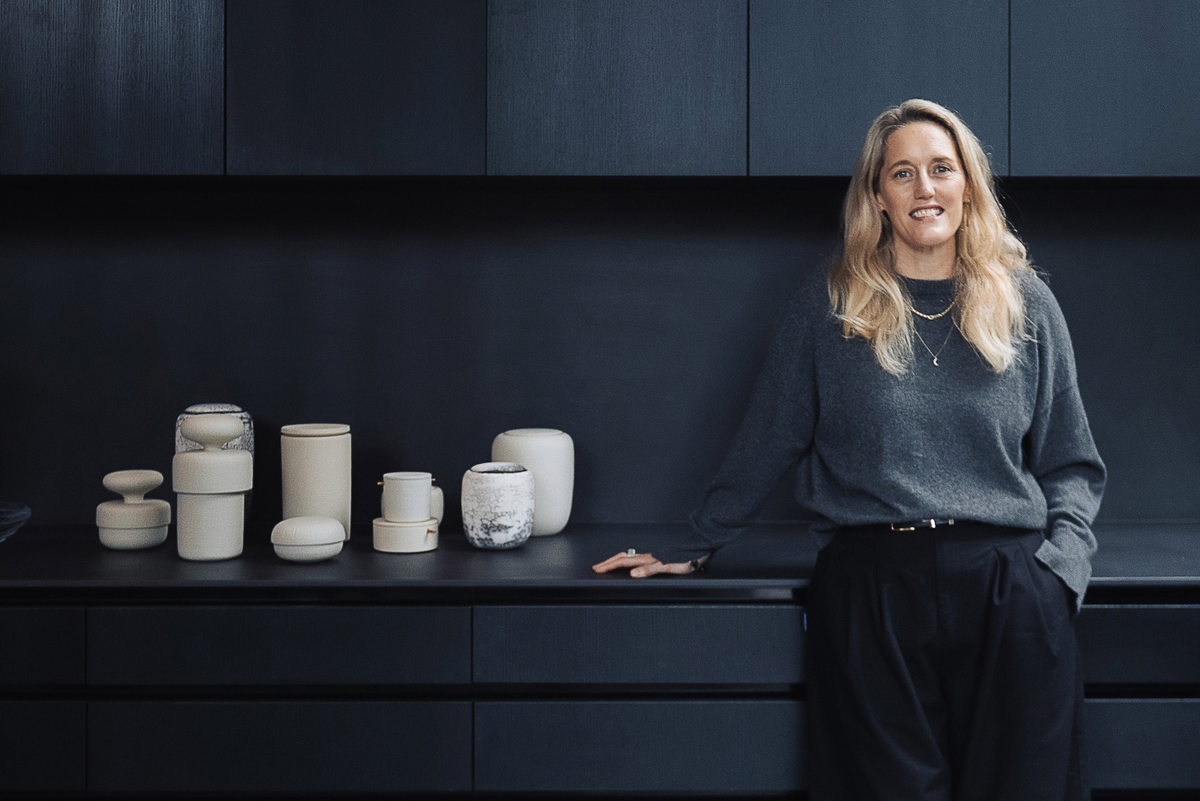
So here's what I've learned, as both a grieving daughter and the founder of Vaso, our New Zealand based business making handcrafted cremation urns.
Can You Legally Keep Ashes at Home in Aotearoa New Zealand?
Yes. Absolutely and without question.
There is no New Zealand law preventing you from keeping a loved one's ashes at home. Once you’ve held the memorial ceremony (in whatever form you choose) and the body of your loved one has been cremated, the ashes are returned to the family and you’re free to keep them in your home for as long as you choose — weeks, months, years, or permanently. Many families do exactly that, and it's one of the most common ways people choose to honour someone they've lost.
The ashes are typically returned to you by the funeral director in a temporary container — sometimes a plain box, sometimes a basic plastic vessel. This is simply a practical handover, not a permanent solution, and there's no obligation to keep them in whatever you receive. Many families (including mine — as I write about in My Mum's Ashes Sat in a Box for Almost Two Years) leave the ashes in this temporary container far longer than they intended, simply because they haven't found something beautiful enough yet.
You can change that whenever you're ready.
Can You Scatter Ashes in Aotearoa New Zealand?
Yes, with some important considerations — and it's worth understanding these properly, because the landscape is more nuanced than many people realise.
New Zealand has relatively few restrictions at a national level, which means families have significant freedom. But local bylaws can be surprisingly specific, and cultural considerations matter enormously. A 2026 RNZ investigation into ashes scattering found that Auckland Council, for example, prohibits scattering across all regional parks, volcanic cones, sports fields, waterways, beaches, and food-gathering areas — a far longer list of exclusions than most people are aware of and it’s worth checking with your own local council to see what bylaws exit in your area.
On private land: You need permission from the landowner. A simple conversation is generally all it takes.
On public land: National parks, beaches and open spaces are generally permissible, though specific sites may have local restrictions and many sites in Aotearoa are tapu, or sacred, to Māori and need to be respected. It's worth checking with your council if you have a particular location in mind.
In waterways: Be thoughtful here. Dispersal of ashes in rivers and waterways is culturally inappropriate in many Māori contexts. Larni Hepi, a Whakatāne funeral director and embalmer, explained it this way when she spoke to RNZ earlier this year: when ashes are placed on land or in water, the tapu (sacredness) of that person is carried into that place, effectively making it an urupā — a burial ground. Ngāti Kuri kaumātua Graeme Neho has spoken publicly about the impact of visitors scattering ashes at Te Rerenga Wairua (Cape Reinga), a site of profound spiritual significance as a place of transition for departing spirits. The local iwi issued a public notice in 2023 asking people not to bring ashes there for scattering.
At sea: Generally permitted, and many families find it deeply meaningful. Discretion and common sense apply — away from public swimming areas, and with awareness of the environment.
The environmental reality: It's also worth knowing that human ashes are not the same as wood ash from a fireplace. A cremation furnace operates at significantly higher temperatures, leaving heavy trace minerals — calcium, magnesium, phosphorus — rather than carbon. These can affect soil pH and waterways in ways that aren't always benign. Roses in memorial gardens have been known to die when ashes are heaped directly onto them. This isn't a reason to avoid scattering, but it's worth being thoughtful about location and quantity.
In all cases, the spirit of the guidance is the same: be respectful of others, be mindful of cultural significance, and use common sense. And if you're unsure, a conversation with your funeral director is always a good starting point — they'll know the local picture.
Can You Divide Ashes Among Family Members?
Yes, and it's more common than you might think.
This was something our family chose to do, and I'm so glad we did. My father wanted some of Mum's ashes buried in a meaningful spot near Akaroa. I wanted some with me in Wellington. My brothers in Australia both wanted a piece of her in their own homes. Because we had that conversation — which felt awkward to raise but turned out to be so much easier than we expected — everyone got what they needed, and Mum's presence is felt across all our lives.
I write more about how we navigated that conversation in Why It's So Hard to Decide What to Do With a Loved One's Ashes, if you're in a similar situation and not sure how to raise it.
Our Memento Series was designed specifically for sharing — small, beautiful, sculptural urns that are genuinely lovely to keep in a home, and easily transported. They start from $225 and come in three designs, each handcrafted in natural clay.
Can You Take Ashes on a Plane?
Yes — you can take cremated remains on a plane, both domestically and internationally. Within New Zealand, no special permission is required. For international travel, you'll generally need a death certificate and cremation certificate, and it's worth checking the requirements of your destination country. Most airlines allow ashes in carry-on luggage (which is strongly recommended over checked baggage), ideally in a container that can be X-rayed.
If you're sending ashes between family members rather than carrying them yourself, a reputable courier service works well — though again, documentation helps.
Can You Bury Ashes in a Garden?
Yes, on your own land or with permission from the owner. Burying ashes in a garden is a lovely, intimate choice — especially if the person loved the garden, or if you want to plant something over them. Bear in mind that ashes have a naturally high pH which can affect soil, so it's worth either mixing them into the soil well, planting over an established plant rather than a new seedling, or mixing in a little compost first.
If you're planning to sell the property one day, it's worth thinking ahead — ashes buried in a garden stay with the land, not with the family.
What About Planning Ahead for Your Own Ashes?
This is something more of us are thinking about — particularly those of us who've watched a parent die without ever having had that conversation. I write about this in our guide to planning ahead for your own death, but the short version is: your wishes for your ashes can absolutely be documented as part of your advance care plan or funeral wishes. You can choose your own urn, specify where you'd like your ashes to go, and even leave instructions for how you'd like the moment handled. It's one of the most loving things you can do for the people who'll outlive you.
Death scholar Dr Hannah Gould, author of How to Die in the 21st Century, made another very good a point about planning that has stuck with me: the single most important thing most people don't know is who their legal next of kin is — and whether that person is actually the right person to be making decisions on their behalf. "If you have a problem with that person making your decisions, change that person," she says. For younger people especially, or those with complicated family situations, this can matter enormously. Your next of kin is the person who will organise your funeral if you haven't specified otherwise. It's worth knowing who that is.
Finding the Right Urn
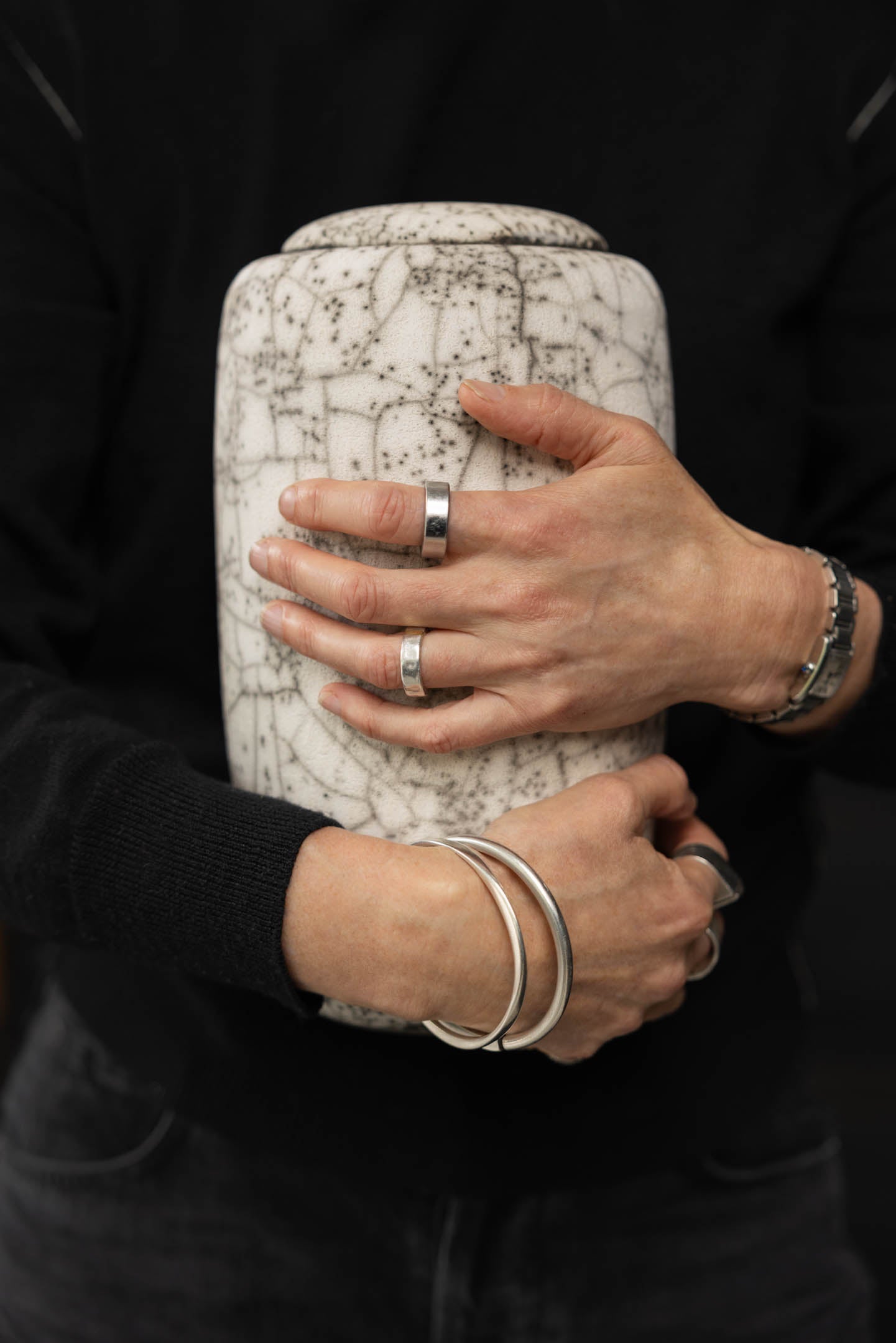
If keeping ashes at home is the path that feels right for you, the urn you choose matters enormously. It will sit in your home, possibly for the rest of your life. It will be the thing that catches your eye on an ordinary Tuesday morning and makes you think of someone you love.
It's worth taking the time to find something beautiful.
Every Vaso urn is handcrafted in Aotearoa New Zealand by talented ceramic artists, made from natural clay, and completely unique. Some starting points:
- For a bold, sculptural presence: Andromeda II or Andromeda I
- For something softer and more organic: Vela I or Vela II
- For something refined and understated: Aquila I
- For sharing between family members: the Memento Series from $225
- For raku-fired one-of-a-kind pieces: the Cygnus Series
If you have questions about sizing, suitability, or anything else, please do reach out to us at hello@vaso.world. We're always here.
With love and kindness,
Bridgit Founder, Vaso