
My Mum's Ashes Sat in a Box for Almost Two Years. Here's Why I Finally Did Something About It.
Here’s something that might surprise you, given that I run a cremation urn company - for almost two years after my mother died, her ashes sat in a rather nasty green plastic container inside a slightly nicer wooden box that the funeral director gave us. That box lived on a shelf in my parents' home, and every time I looked at it, I felt a small, quiet pang. Not quite guilt. Not quite grief. Something in between. The nagging sense that this extraordinary woman, my brilliant, fierce, wildly funny mother Bar, deserved something so much better than a generic container from a funeral home.
And I did nothing about it. For almost two years.
If you're reading this with your own version of that box somewhere in your home — on a shelf, in a wardrobe, at the back of a cupboard — I want you to know that you are not alone. Not even slightly. This is one of the most common experiences in grief, and one of the least talked about.
Why Do So Many of Us Leave It So Long?
There's no single answer. But from my own experience, and from the many conversations I've had since starting Vaso, a few themes come up again and again.
We don't know what we want yet. When someone you love has just died, you're not in a state to make considered aesthetic decisions. You're in survival mode. The funeral home gives you something temporary and you accept it, because that's all you can manage right now. And then the weeks turn into months.
It feels like a conversation no one wants to have. In my own family, my father had one idea about where Mum should ultimately rest, I had another, and we hadn’t really even talked about it with my brothers in Australia at all. Nobody wanted to bring it up because it felt awkward, or slightly disrespectful, or like it might open up a grief that we'd all quietly started to put a lid on (I write about this in more depth in Why It's So Hard to Decide What to Do With a Loved One's Ashe - and trust me, the conversation is so much easier than you think it will be).
We can't find anything beautiful enough. This one is deeply personal to me because it's ultimately why Vaso exists. When I finally started searching for a proper urn for my mother — someone who had a wonderful eye for design and would've had a very strong opinion about what she wanted — the options were almost uniformly awful. Gaudy faux-Grecian. Dark, heavy, institutional wooden boxes that looked like they belonged in a solicitor's office. Nothing I could imagine living with proudly. Nothing that felt like her.
And so I kept putting it off, waiting for something better to come along. Or waiting for the courage to commission something. Or waiting, if I'm honest, because deciding felt final in a way I wasn't quite ready for.
What Waiting Actually Costs You
Here's the thing I didn't fully understand until I finally acted: the waiting itself has a weight to it.
Every time I passed that shelf, there was a low-level, unspoken guilt. Every time someone came to visit my parents and the box was visible, there was a brief, uncomfortable pause. The object that was supposed to be a symbol of love and memory had become, through no fault of anyone, a symbol of an unresolved decision.
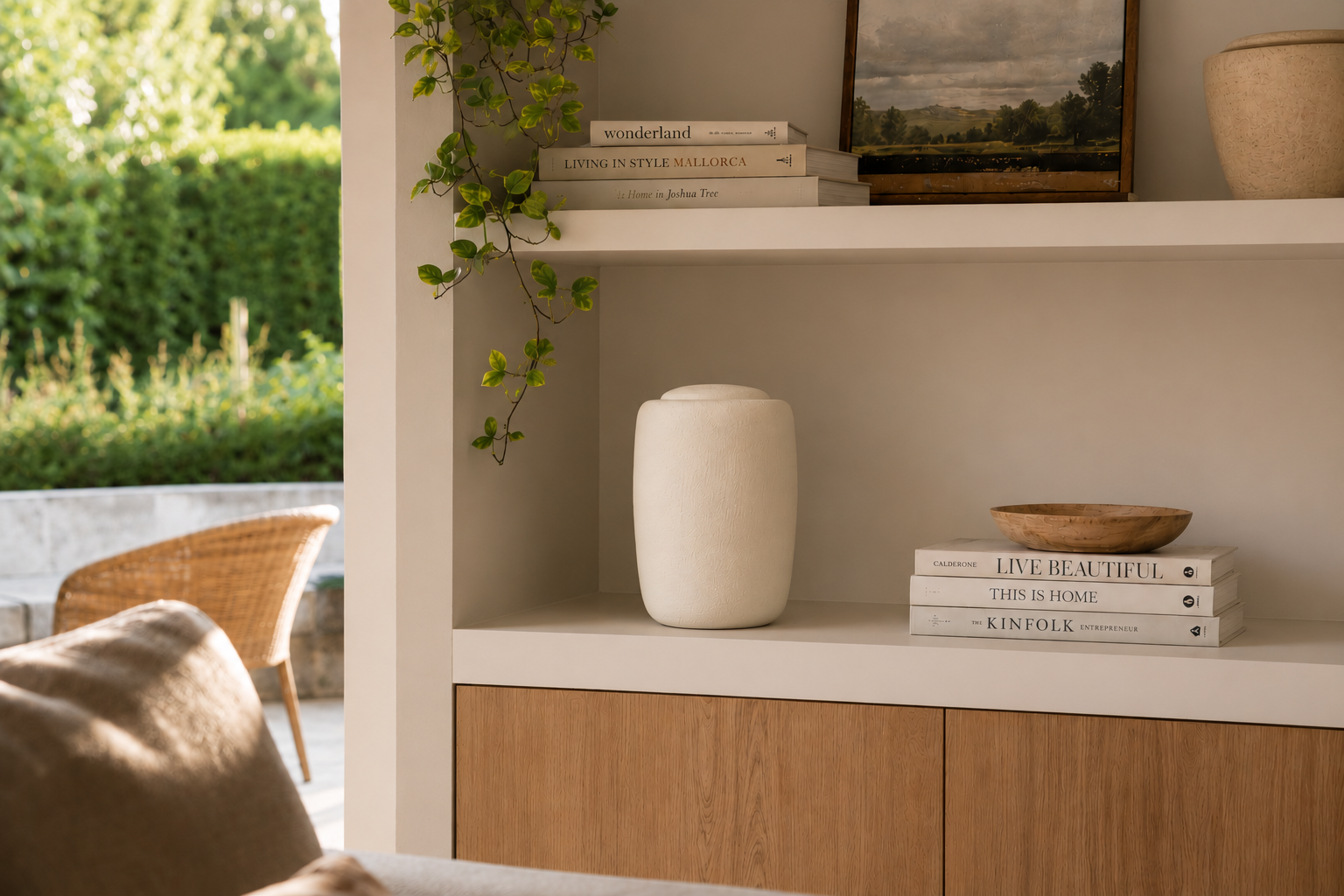
And what I discovered, when we finally did sort it all out as a family, was that the act of choosing a beautiful urn — of deliberately and lovingly deciding how to honour Mum — was one of the most healing things we did in our grief. Mum's ashes now sit in a stunning handcrafted Vaso urn in our home in Wellington. I walk past it every single day. And every single day, I smile.
That was the whole point. That's what I wanted from the beginning. It just took me too long to get there.
"The act of choosing a beautiful urn — of deliberately and lovingly deciding how to honour someone — was one of the most healing things we did in our grief."
But Can You Even Transfer Ashes to a New Urn?
Yes. Absolutely, and it's much more straightforward than most people realise.
Ashes (or cremated remains, to use the more formal term) are typically returned to families in a temporary container — often a plain plastic or basic wooden vessel. This is simply a practical container, not a final resting place, and there is nothing disrespectful or unusual about transferring them into an urn of your choosing.
The process is simple: your new urn arrives and you simply take the plastic bag full of ashes from the temporary vessel and gently put it into your chosen urn. Many people choose to make a small ritual of it — a quiet moment alone, or a gathering of close family — but it is entirely up to you. If that seems a little daunting, you can always take it to the funeral home where your loved one was cremated and ask them to transfer the ashes for you. There are no rules. The only thing that matters is that it feels right.
What About Sharing Ashes Among Family?
This was something our family did, and I'm so glad we did.
Once we broke the seal and actually had the conversation about what everyone wanted, we realised that each of us had been quietly hoping for the same thing: a piece of Mum with us, in our own homes, in our own way. My father wanted some of her ashes buried in a beautiful spot near Akaroa — one of her favourite places. I wanted her with me in Wellington. My brothers wanted a piece of her with them in Australia.
Sharing ashes between family members is perfectly legal and increasingly common. It means each person who loved that someone can honour them in their own way, in their own space, without anyone having to give anything up. Our Memento Series was designed specifically for this — beautiful, small, sculptural vessels that make sharing ashes a considered, lovely act rather than a clinical one.
On Finding Something Beautiful Enough
I started Vaso because I couldn't find anything worthy of my mother. You can read the full story here, but the short version is this: I believed then, and I believe more strongly now, that the vessel you choose to hold someone's remains is one of the most meaningful objects you will ever own. It will sit in your home, possibly for the rest of your life. You will walk past it every day. It will be the thing that catches your eye and reminds you of them.
It deserves to be beautiful.
Every Vaso urn is handcrafted in Aotearoa New Zealand, made by talented local ceramic artists from natural clay. Each one is unique — not in a marketing-brochure way, but genuinely, because that's what handcraft means. No two are the same. Which feels, to me, entirely right for something that holds a person who was entirely themselves.
A Note on Timing
There is no right timeline. Grief doesn't run on a schedule, and neither does this decision.
Some people need to act quickly — choosing an urn is part of how they process loss, a way of taking action when everything else feels out of control. Others need time. Some people wait months. Some wait years. Some, like me, wait almost two years while quietly carrying the weight of an unresolved decision.
What I'd gently say is this: if that weight has started to feel heavier than the grief itself — if the box in the wardrobe has become a source of low-level guilt rather than a neutral resting place — it might be time. Not because you owe it to anyone. But because you might find, as I did, that choosing something beautiful is one of the most loving things you can do. For them, and for yourself.
A few pieces I'd particularly point you towards if you're looking for something to transfer ashes into:
For something bold and sculptural: The Andromeda I is a statement piece — a genuinely striking object that commands attention and would look at home in any design-conscious space. If your person had strong opinions about beauty, this is the one.
For something quieter and softer: The Vela I has a beautiful, gentle presence — rounded, warm, utterly serene. It's the kind of urn that fits naturally into a home without demanding to be noticed, but rewards you every time you do notice it.
For something utterly unique and individual: The Cygnus I is hard to go past. Individually raku fired, each limited edition Cygnus urn has been transformed by fire to create a unique personality and exquisite texture. No two are the same providing a stunning tribute to
For sharing between family: The Memento Series — our small, sculptural keepsake urns — starts from $225 and allows you to share ashes with siblings, children, or close friends, each with something beautiful to keep.
If you're not sure where to start, browse our full collection or read our guide to choosing the right cremation urn for your loved one. And if you'd like to talk it through with a real human being, please do reach out — we're at hello@vaso.world and genuinely here to help.
With love,
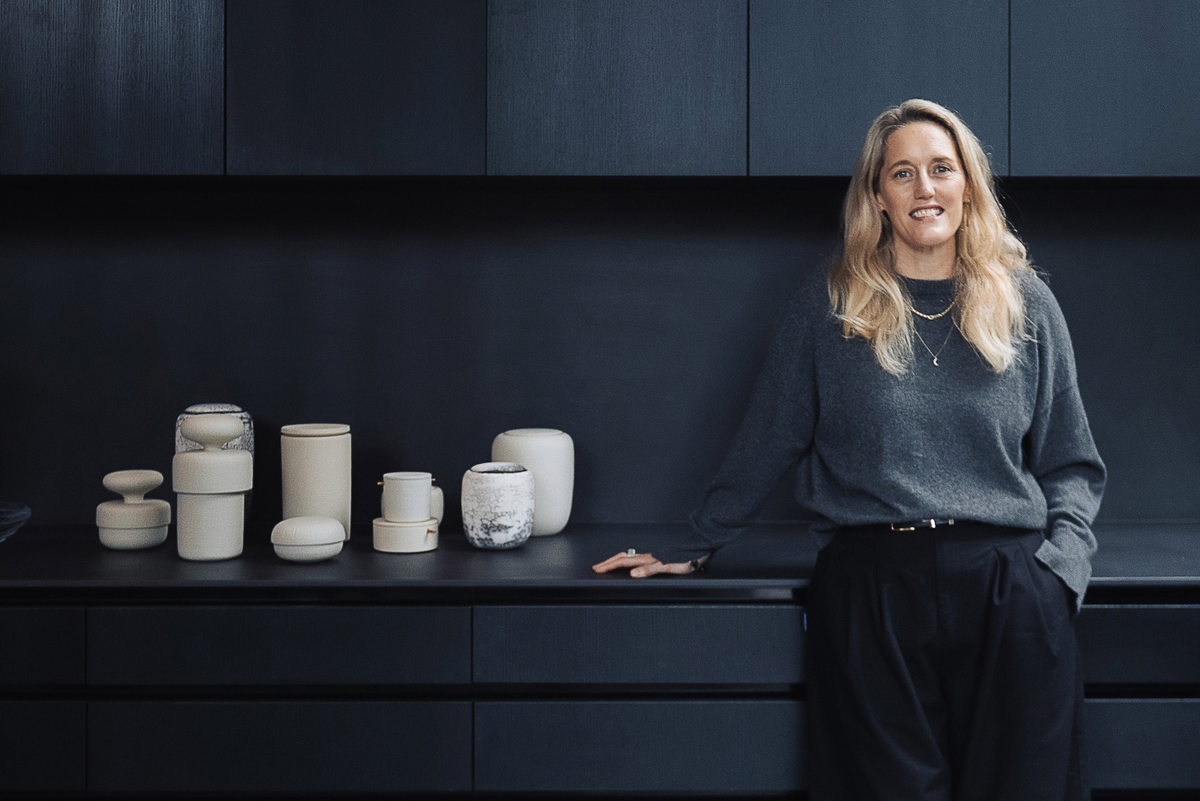
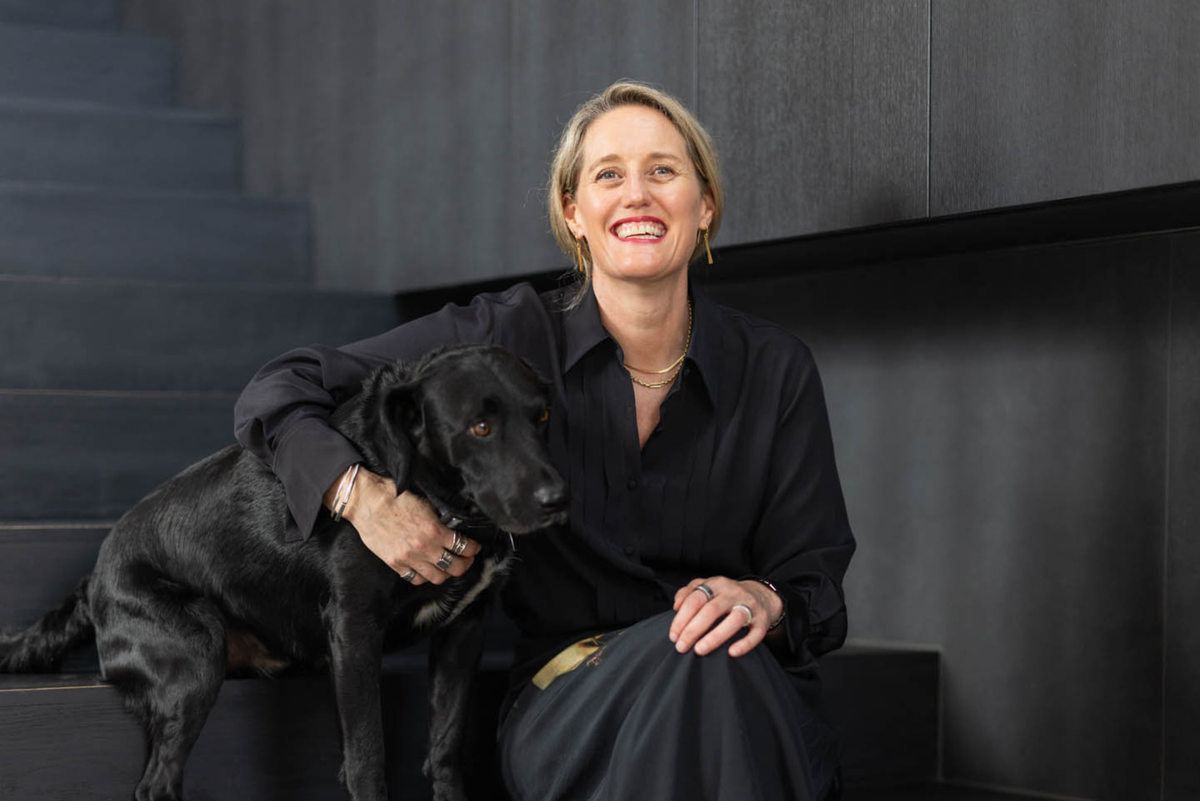
Bridgit Founder, Vaso